Porter Five Forces - Competitive Analysis
And the Threat of Substitute Products
Content rich web pages, including free porters five forces template available in PDF or MS Word. Plus handy hints and tips for leaders. Quick link to porters five forces template
Introduction to the Threat of Substitute Products
An analysis of the threat of substitute products will identify the likelihood that customers to your industry will switch to purchasing an alternative product from outside your industry.
You will find that the impact on your industry will vary depending on the take up rate of the substitute products. A substitute product can decimate an industry overnight or may have little to no long term impact.
Analyzing the threat of Substitute Products
To analyze the threat of Substitute Products, you will need to consider the following factors,
Or Click here to view and download a free Porter Five Forces Template
Analysis Criteria |
Description |
| The relative price performance of substitutes |
Refers to the cost effectiveness of the substitute products, (Total supply chain costs) Alternative products that provide overall savings to your customers, without impacting the quality of your customer’s products or services are more likely to be viewed favorably for adoption. |
| Switching costs | Refers to any cost incurred by your customers to switch to an alternative product Does your customer incur any costs to switch to a substitute product? These costs could be legal review of new contracts, change in spare parts and change in ordering systems. These may also be intangible costs such as risk. |
| Buyer propensity to substitute | Refers to your customers loyalty to your product or service How do your customers react to substitutes, do they trial them or are they loyal to your industry? It would also pay to identify the things that need to change for your customers to change their propensity to trial substitute products. |
Sample Porter Five Forces Template, Analysis of the Threat of Substitute Products
Analysis Criteria |
Risk Rating |
||
High |
Medium |
Low |
|
The relative price performance of substitutes |
|||
Switching Costs |
|||
Buyer propensity to substitute |
|||
Overall Risk Rating |
|||
Scroll down for another sample porter five forces template
Alternative Template for the Threat of substitute products
The following free strategic planning template can be used to determine if each of the factors that affect the threat of substitute products has a positive or negative risk.
You can then give an overall rating for this force.
The threat of substitute products |
Comments on the threat of substitute products |
Rating |
The relative price performance of substitutes |
|
|
Switching Costs |
|
|
Buyer propensity to substitute |
|
|
The threat of new entrants overall rating |
||
Porter Model Templates from What Makes a Good Leader, View and download our Porters Five Forces Template Here
After completing your Analysis
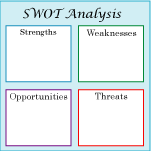
After completing your analysis you should transfer the key highlights to your SWOT analysis. Generally, you only need to add high level commentary to your SWOT.
Given that Porters five forces is an industry analysis technique you will only need to update the opportunities and threats in your SWOT analysis.
Why not take 5 minutes to learn how to use all five forces in the porter model to ensure you can analyze and understand the nature of competition in your industry.
Thank you for visiting our Porter five forces section
Site Navigation
Site Links
Porter's Five Forces
Free Templates
Popular Pages